 Grain handling · Installation · Repairs
306 Mechanical / Field notes
Small Transitions, Big Bottlenecks: Grain Conveyor Connections
Conveyor capacity on paper can be undermined by awkward transitions, shared routes and difficult bin access.
Trace the grain route by route
Draw each movement from receiving to storage, drying or processing. Mark switches, spouts, diverters and shared sections. This reveals where different operations depend on the same piece of equipment.
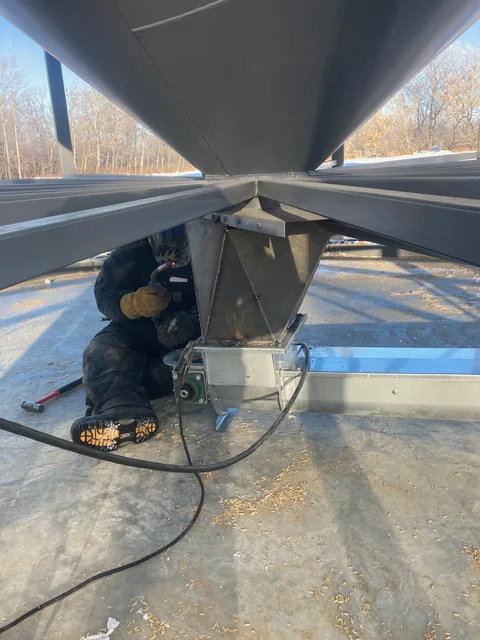
Pay attention at transfer points
Spouting angle, opening size, alignment and the way grain enters the next machine can influence flow. Manufacturer recommendations and crop characteristics should guide final dimensions and transitions.
Think about access and maintenance
Provide practical access for inspection, cleanout and maintenance. Plan guards, supports and safe routes around elevated equipment as part of the installation.
Validate the operating sequence
Walk through normal and alternate routes with operators. Confirm bin destinations, diverter positions and what happens when a route is unavailable. Commissioning should verify the intended paths under controlled conditions.
Every farm, crop and equipment combination is different. Use the equipment manufacturer’s instructions and qualified local advice for sizing, structural, electrical and operating decisions.
Sources and further reading
Planning an installation or upgrade? Talk with 306 Mechanical about your grain-handling project, or see projects from the field.